Two questions
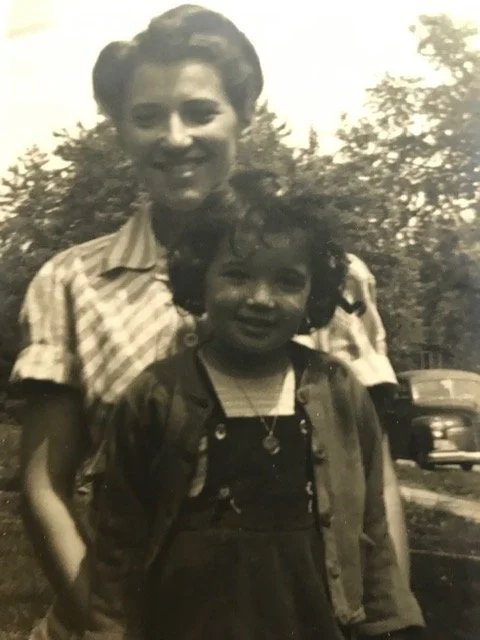
SaraKay and her mother, Charlotte, Oswego Avenue in Lower Park Heights, Baltimore, undated
To the editor:
Growing antisemitic violence worldwide — with hate sanctioned through sentiments like those expressed by Vice President JD Vance at the recent Turning Point USA conference — compels me to share a personal story. The Baltimore of my youth was a time marred by disgraceful, degrading Jim Crow laws. Large signs were posted throughout neighborhoods and establishments reading, “No Jews, Negroes, or Dogs.” With regularity, our school classes traveled to Philadelphia to visit the Liberty Bell, which is inscribed with words from Leviticus 25:10: “Proclaim liberty throughout the land unto all inhabitants thereof.” No teacher ever referenced the disparity between these words and life as endured in Baltimore.
Following the April 4, 1968, assassination of the Rev. Dr. Martin Luther King Jr., parts of inner-city Baltimore erupted in flames. My father’s business, a fuel oil company started by his father, was destroyed, including the trucks that serviced families with necessary heating oil and the accounts receivable. Although most of his customers lived far from the business location, my father cared about those living near his business, providing heat for countless families, never expecting payment, contributing to all charities he knew about, and, when invited, attending church services with our family. On April 10, eight months pregnant with my first child, I stood in front of my father’s former business, scorched and burned, the smell of destruction ever-present. I heard a man my dad recognized taunt us with a slur. My anguished mother quietly responded, not to the man but to me, “Why are we so hated?”
Our beloved rabbi, Uri Miller, urged my father to declare bankruptcy, but he refused. My parents sold their comfortable home, most furnishings, and cashed in savings. As soon as his debts were paid, he and my mother moved to a small apartment in Florida. My father believed he had dishonored his father’s name, failed his wife, and disgraced his family. Eventually, my father kept his promise to my mother, bringing her home to be buried in the same Baltimore cemetery as her parents. Several years later, he was buried beside her. More than 30 years after her death, my mother’s haunting question remains: Why are Jewish people so hated? Or to draw on the prescient, thought-provoking insights of Holocaust survivor and activist on behalf of the protection and well-being of all people, Elie Wiesel: Are Jews only spoken up for once we are dead?
SaraKay Smullens
Philadelphia
Published in The Philadelphia Inquirer, January 16, 2026